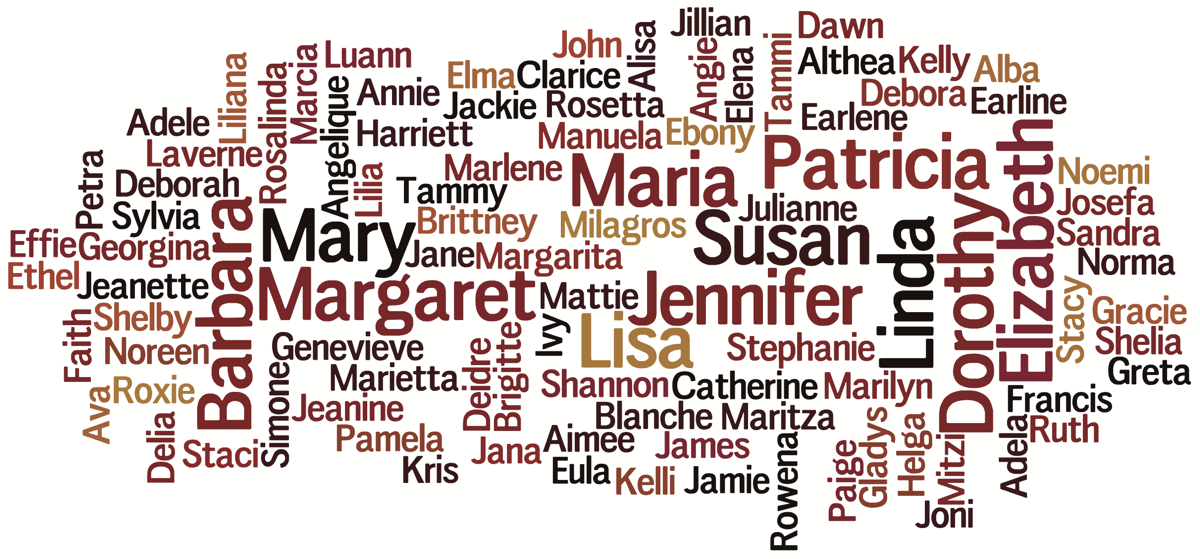
Your great-grandmother might appear as "Mary," "Marie," "Maria," or even "Polly" across different records. Name variations aren't errors to fix—they're clues that unlock hidden family connections. Learn how to format names correctly AND leverage variations to find ancestors others miss.
In This Article
Why Name Variations Matter: A Real Discovery
Do name variations really help find ancestors?
Absolutely! Name variations have been the key to breaking through countless genealogical brick walls. Before spelling was standardized, census takers, clerks, and priests often wrote names exactly as they heard them—frequently distorted by thick accents on both sides of the conversation. These "mistakes" are not failures of the record but are, in fact, powerful search tools once you learn to anticipate them.
Let me share a couple of stories that fundamentally changed how I approach family research:
Unraveling the Mystery of Sally Rinkhannadd
For years, I searched for a 4th great-grandmother whose Kentucky marriage record transcription listed her maiden name as Sally Rinkhannadd. With no family tradition preserving her name, this transcription was my only lead. All I knew was her husband's name, that they were Catholic, and that they lived in Kentucky and Indiana.
After years of fruitless searching for anyone with a similar surname, I concluded the transcription must be flawed and eventually set the puzzle aside.
Fortunately, records were later digitized and made available online. While the initial translation still read "Rinkhannadd," I was finally able to put my eyes on an image of the original document. What did I see? Buckhannan!
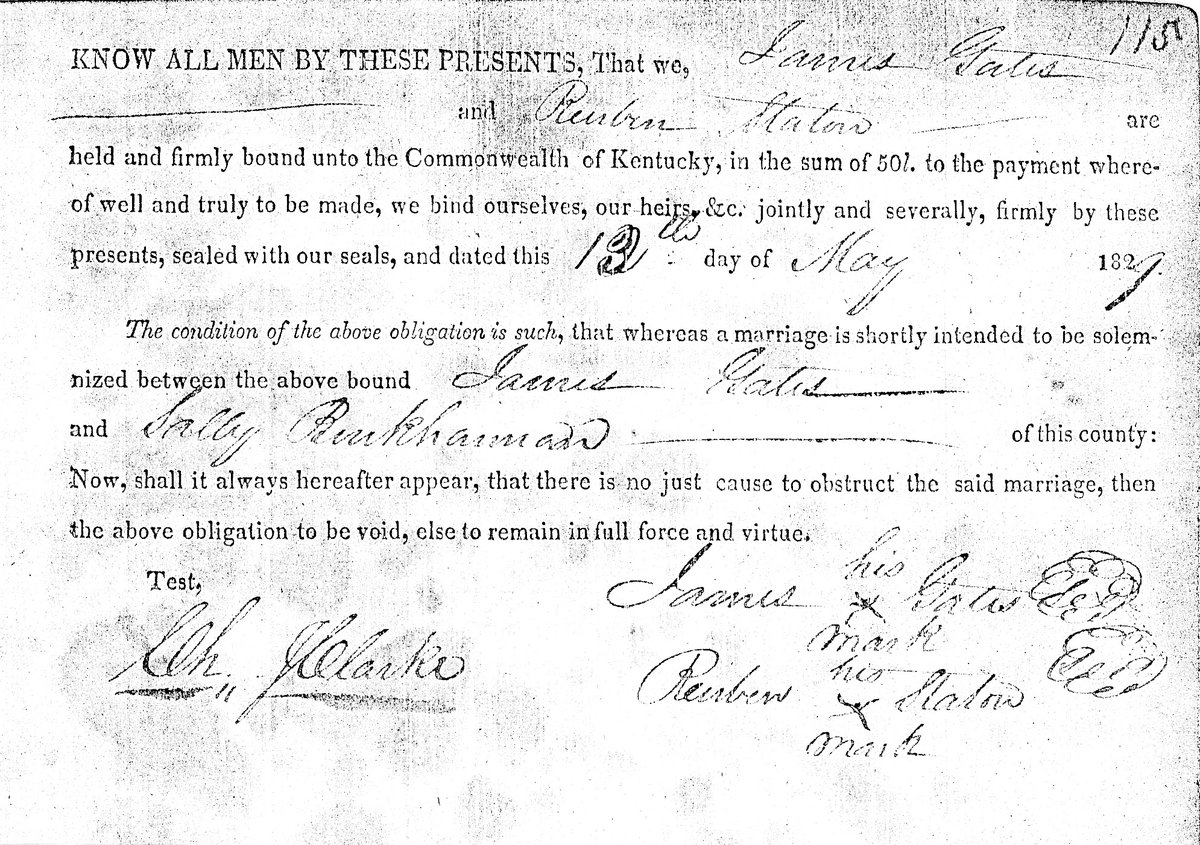
Seeing the original handwriting immediately clarified how "Rinkhannadd" had been transcribed. With this new lead, I was able to narrow down her father to George Buchanan (with Buckhannan as a common variant spelling). Furthermore, I found her referred to as both Sarah and Sary in other family histories.
The inconsistencies continued even after her death: a son's death record listed her name as Sarah Smith. More probing revealed that her husband married a second wife named Sarah Smith in 1841. By cross-referencing children's birth dates and the second marriage date, the first Sarah (Buckhannan/Buchanan) is now presumed to have died between 1840 and 1841. Every conflicting name was a clue that led to a new layer of discovery.
The Many Aliases of Xavier Thomas Prentis
I knew my 2nd great-grandfather's full name was Xavier Thomas Prentis, yet I could not, for the life of me, locate him in the census records under this correct name. Both his first and last names were consistently either misspelled or incorrectly transcribed. I had to locate him by anticipating common transcription errors (e.g., in old-style handwriting, an X often looks like an H), and by searching for family members, occupation, and common spelling variations.
| US Federal Census | Name Recorded |
|---|---|
| 1850 | Havier Runtz |
| 1860 | Exavier Prentiss and Exeva Prentiss (enumerated twice a week apart) |
| 1870 | Xame Prentiss |
| 1880 | H. T. Prentiss |
The Death Date Discrepancy
His death brought more inconsistency. His obituary, published March 13, 1884, stated he died on March 4, 1884, and was survived by his wife, Rebecca. However, his headstone clearly inscribed his death date as March 4, 1885.
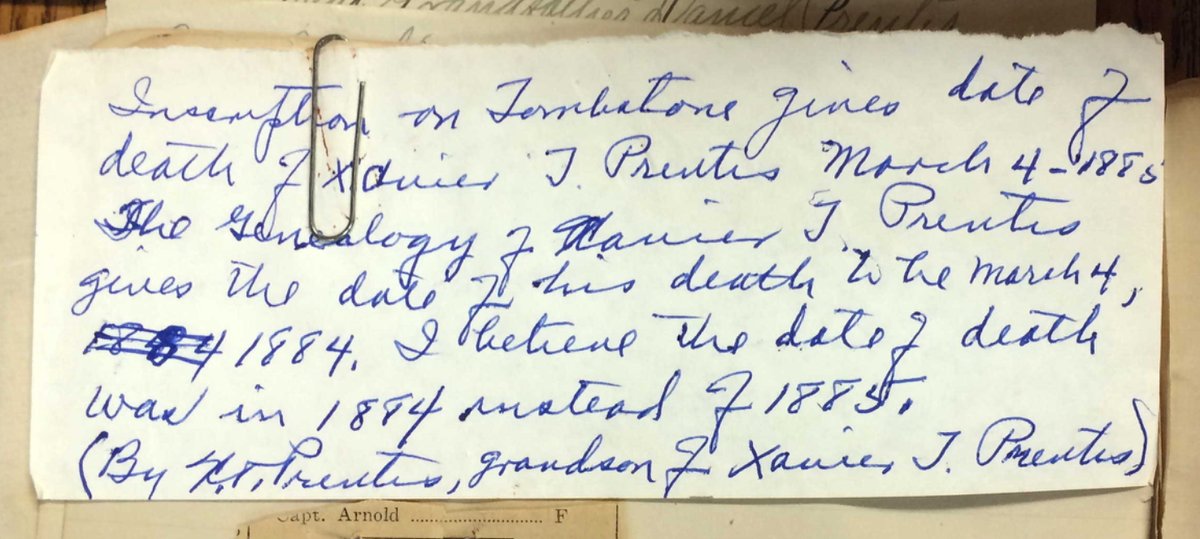
Thanks to digitized records, specifically "Iowa, Wills and Probate Records, 1758-1997" (available since 2015), we found the definitive answer:
- Rebecca's estate papers included a promissory note written and signed by her to her sister April 25, 1884—after Xavier had died the previous March.
- Another paper stated that on or about November 6, 1884 (the day Rebecca died), guardianship of their children was granted to her sister.
The guardianship would not have been an issue until March 1885 if Xavier had died that year. The estate papers definitively proved the obituary date (1884) was correct, and his headstone date (1885) was incorrect.
Standard Name Formatting Rules
The Basic Format
Most genealogy platforms expect names in this format:
- Given names first: John William (not William, John)
- Surname last: Smith
- No titles: Omit Dr., Rev., Jr., Sr. from the name field (add to notes)
- Original spelling: Record names as they appear in records, not modernized
Capitalization Conventions
Different platforms handle capitalization differently:
- Ancestry.com: Standard capitalization (John Smith)
- Some European databases: Surnames in ALL CAPS (John SMITH)
- GEDCOM files: Standard capitalization with surname delimiters
When in doubt, use standard capitalization. Most software will handle the conversion for export.
Maiden Names and Marriage
How should I record a woman's maiden name?
Always record women under their birth surname (maiden name), not their married name. This is the universal standard across all genealogy platforms. Use the maiden name in the surname field, and the software will display married names based on spouse relationships.
Why Maiden Names Matter
- Connects to birth family: Her parents, siblings, and earlier ancestors all share this surname
- Avoids confusion: A woman married three times would have four "names" otherwise
- Software handles display: Family tree software shows married names automatically based on relationships
What If You Don't Know the Maiden Name?
Enter what you know:
- Known married name only: Leave surname blank or use (---), add married name in notes
- Possible maiden name: Enter it with a note about uncertainty
- Multiple marriages: Track each married name in the marriage records or notes
Handling Nicknames and Alternate Names
Historical records are full of nicknames that seem unrelated to the legal name:
| Legal Name | Common Nicknames |
|---|---|
| Margaret | Maggie, Peggy, Meg, Marge, Daisy, Greta |
| William | Will, Bill, Billy, Willy, Liam |
| Elizabeth | Liz, Beth, Betty, Betsy, Eliza, Lizzie, Bessie |
| John | Jack, Johnny, Jock, Ian, Sean |
| Mary | Polly, Molly, Mae, Maria, Marie, Mamie |
| Richard | Rick, Dick, Richie, Rich |
| Robert | Rob, Bob, Bobby, Robbie, Bert |
Recording Nicknames
- Ancestry.com: Use the "Also Known As" field for nicknames
- FamilySearch: Add alternate names in the dedicated section
- GEDCOM: Use the NAME tag with type NICK for nicknames
Recording Unknown Names
What should I enter when I don't know someone's name?
Use consistent placeholders that your software recognizes. Most platforms support entering partial information while clearly marking what's unknown. Never guess or make up names—unknown is better than wrong.
Recommended Placeholders
| Situation | What to Enter | Notes |
|---|---|---|
| First name unknown | (---) or leave blank | Some platforms use [Unknown] |
| Surname unknown | (---) or leave blank | Can add married name in notes |
| Gender unknown infant | Baby, Infant, or Child | With surname if known |
| Stillborn child | Stillborn + Surname | Add any known details in notes |
What NOT to Use
- Avoid "Unknown" as a surname—it can create false matches
- Don't use N/A or N.N.—software may not recognize these
- Never leave person records empty—add whatever you know, even if it's just "Wife of John Smith"
Search Strategies for Name Variations
Understanding how names vary helps you search more effectively:
Common Variation Patterns
- Phonetic spelling: Xavier/Havier, Smith/Smyth, Meyer/Myer/Meier
- Translation: Giovanni/John, Wilhelm/William, Pierre/Peter
- Abbreviation: Wm. for William, Jno. for John, Chas. for Charles
- Transcription errors: Letters that look similar (S/L, U/V, C/G)
- Regional variations: Mueller/Muller, MacDonald/McDonald
Search Tips
- Use wildcards: Search "Sm*th" to find Smith, Smyth, Smythe
- Try soundex searches: Most platforms have phonetic search options
- Search given name variants: Look for all nickname possibilities
- Consider the recorder: Who wrote the record? What was their native language?
- Check neighboring records: The same clerk recorded multiple entries
Frequently Asked Questions
Should I "correct" spelling errors I find in historical records?
No—record names exactly as they appear in each source. Use the primary name field for the most accurate version, but preserve original spellings in source citations. What looks like an error might be a valuable clue about the record's origin or the family's background.
My ancestor used different names throughout their life. Which one should I use?
Use their birth name as the primary name. Add all other variations (married names, naturalized names, nicknames) in alternate name fields. This preserves the complete picture while maintaining connections to their birth family.
How do I handle non-English names and special characters?
Use the original characters whenever possible. Most modern genealogy platforms support Unicode characters (umlauts, accents, etc.). If you must simplify for searching, keep the original in notes.
What about Jr., Sr., III, and other suffixes?
Most platforms have a dedicated suffix field—use it. Don't add suffixes to the name field itself, as this can interfere with matching algorithms. If there's no suffix field, add it to notes instead.
How do I record a woman's name before I know if she was married?
Enter what you know and add details as you discover them. If you only know "Mary Smith" from a marriage record, that's likely her maiden name. Add it as the surname and update if you learn otherwise. Document your reasoning in notes.
Should I standardize spelling across my family tree?
Resist the urge to standardize. Variations are historical evidence. Instead, use alternate name fields to link variations together while preserving the exact spelling from each record.
Summary
- Name variations are clues, not errors: Spellings like Rinkhannadd/Buckhannan or Havier/Xavier unlock hidden connections
- Use maiden names: Always record women under their birth surname
- Record exactly what you see: Preserve original spellings from records
- Use alternate name fields: Track nicknames, translations, and variations
- Search creatively: Use wildcards, soundex, and think phonetically
- Cross-reference discrepancies: Conflicting dates and names are puzzle pieces, not dead ends
- Document unknowns: Use consistent placeholders, never guess
Need Help With Name Variations?
GenConverse's Genie assistant can help you identify potential name variations and search across your uploaded GEDCOM files. Try Genie to explore your family data, or contact us for personalized research consultation.